
Boreal peatland ecosystems and management. I studied peatland ecology and forestry at the University of Helsinki. The versatile education provided a thorough understanding on peatland development, carbon dynamics, ecohydrology, the role of plants in peat production and processes, the Finnish peatland classification systems, as well as how management and climate related disturbances affect on peatland processes and the fate of carbon stored as peat over millennia. So far, I have adapted this background to Tropical, Arctic and Boreal regions.
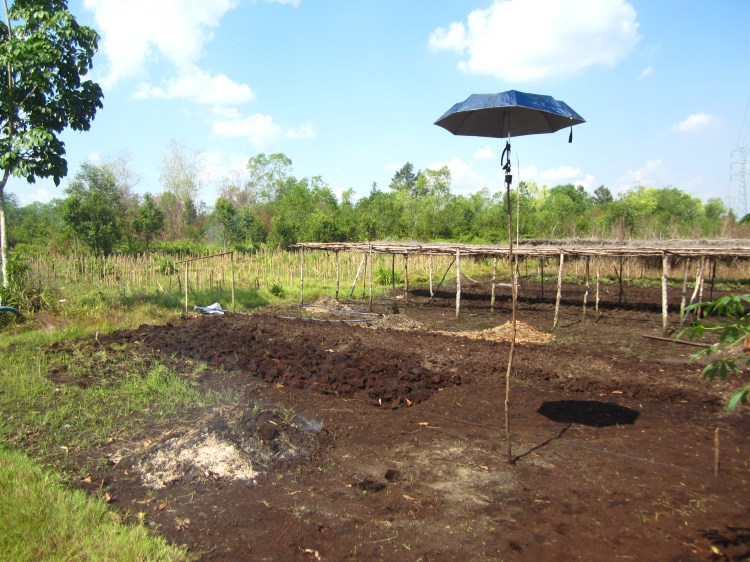
The effects of land use change on peat properties in tropical peatlands. Vast areas of tropical peat swamp forests are deforested and drained for agriculture and plantations. At the degraded sites, new formation of peat is not supported and they are prone to wildfires, which turn tropical peatlands into globally significant carbon sources. Yet, even basic processes on these vulnerable ecosystems have not yet been fully understood. In my PhD, I unraveled how land use change shapes the biochemistry of tropical peat and linked it to changes in microbial dynamics. (Könönen et al. 2015; 2016; 2018)

Effects of long-term warming and increased nutrient availability, and vegetation on organic surface soil properties in the Arctic. Arctic regions are warming faster than any other part in the world, which accelerates decomposition processes and alters vegetation composition putting a threat on the soil carbon. A 30-year-long warming and fertilization experiment nearby Toolik Lake field station provided unique opportunity to study the long-term effects of increased temperature and nutrient availability and following shift in vegetation on organic surface soil properties. (manuscript in prep.)
In the on-going work, the focus is on plant-peat-microbial interactions. The goal is to solve the role of shrubs on peat processes, whether or not shrubs affect on it, and how that reflects on the soil carbon pool. This help us to better predict the climate feedback from peatlands, where climate and management induced drought increase shrub vegetation, and therefore potentially also provide tools for planning carbon neutral utilization and management of peatlands.

Toolkit
Field
- Digging holes in boreal, tropical and arctic climate
- Soil sampling
- Root in-growth socks and litter bag studies
- Forest and soil inventories
- Planting and thinning forest
Laboratory
- Sample preparation & processing
- DOC, DON, NH4, NO3, total C & N, nutrients (ICP-MS)
- Carbon compound composition: Sequential characterization & FTIR
- Lipid extraction
- Microbial biomass (chloroform fumigation)
- Extracellular enzyme activity
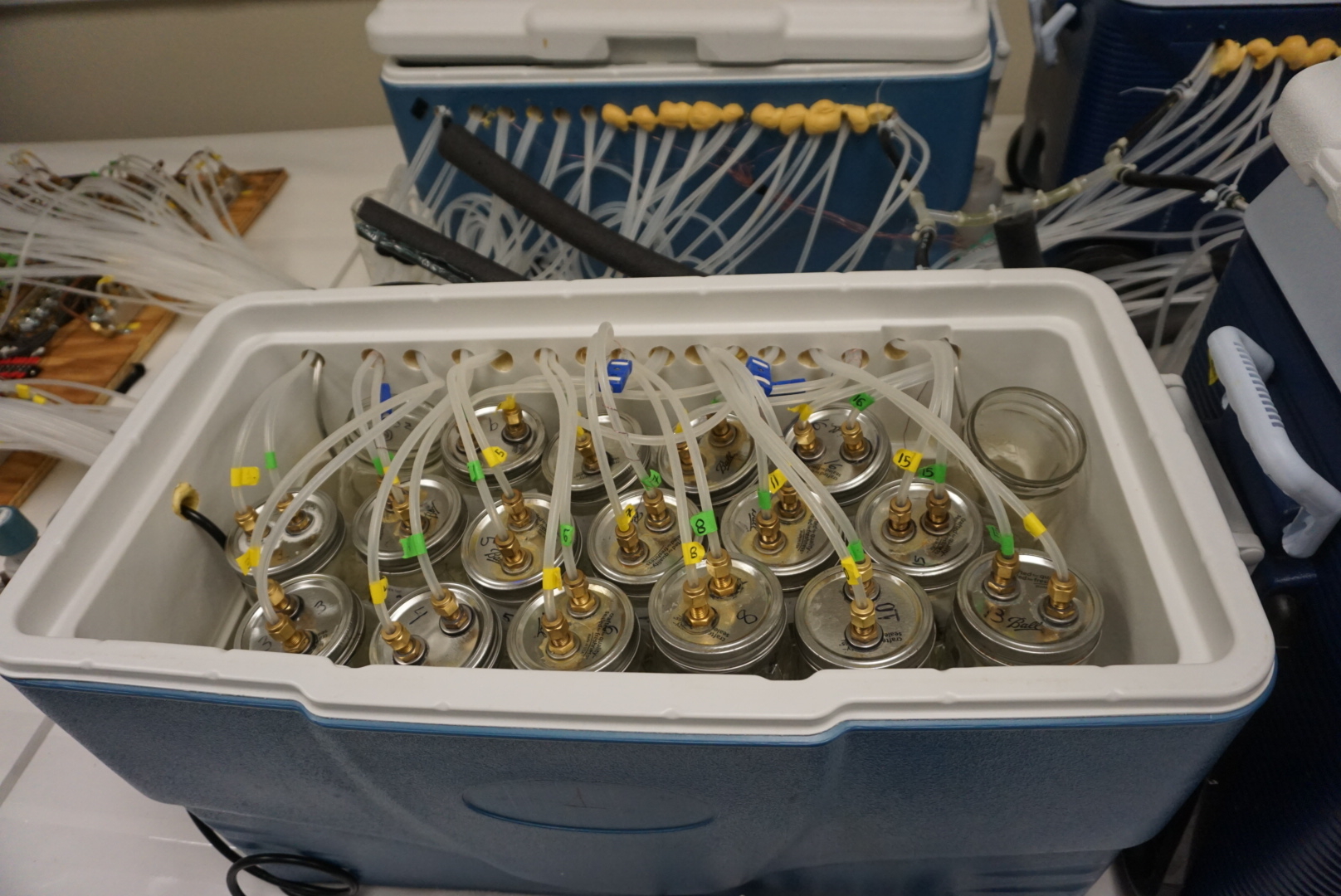
- Ex situ incubations & CO2 measurements
Stats & programs
- Data management (R & excel)
- Anova & linear regression (R)
- Multivariate analysis using ordinate methods (Canoco5 & R)
- Courses on data exploration, linear regression and mixed effect models with R
- Modeling with Forest-DNDC


 Mari Könönen